Our Autumn 2024 talk saw Andrew Borkowski following up on the operatic journey taken in Spring earlier this year.
On this journey the audience were taken across Europe by way of eleven pieces of music which varied from operatic extracts to Carols and even a song by Edith Piaf. We started in England and finished in England visiting six other European countries and as always Andrew gave detailed background on each piece of music. Andrew always likes to include interesting little facts about the life and times of each composer or singer so that when the extract is played the listener can fully appreciate it. There were three pieces of music on our Polish stop including The Legend of the Baltic written in 1924 by Feliks Nowowiejski – a composer new to many of us.
This evening covered a wide variety of music including some pieces that are probably not widely heard which made it all the more interesting for the audience. We look forward to seeing Andrew next year for another interesting and stimulating musical experience.
Jeremy Halpenny
The collection Bristol Museum and Art Gallery holds is for the city and people of Bristol. Bristol is alsoa City of Sanctuary, and a place where at least 91 languages are spoken. The World in Bristol Festival isa celebration of the city as a place of welcome, and the diverse communities which make it a vibrant cultural hub.From this basic idea, and working with our partners at Diverse Artists Network, we developed a universal, joyful and celebratory programme of activities with appeal for people of all ages.So, with craft activities, dance displays, storytelling, music, curator tours and theatre, all of which were free and open to all, we threw open the doors to the museum on a sunny Saturday in September. We had joyful Japanese folk songs, Indian classical dance, Polish storytelling, Senegalese Griot and Colombian folk dance, alongside provocative and intelligent explorations of our world collection from New Zealand Samoan/Welsh comedian James Nokise and DJ Don Luchito. Curators offered tours of objects and stories from the collections.
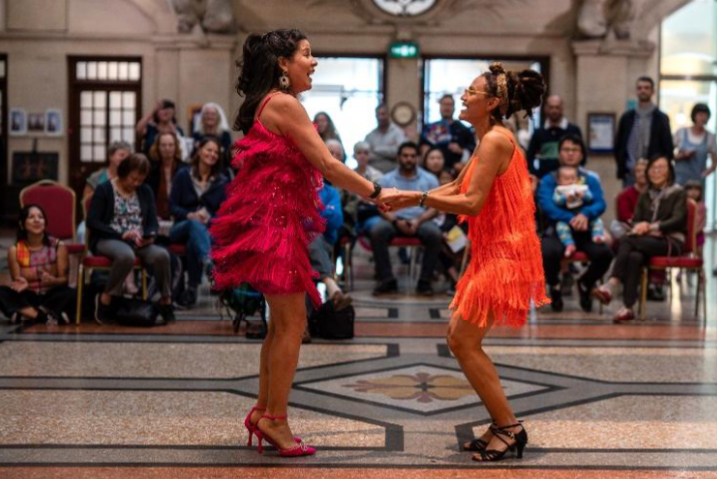
All the while, our brilliant MC, Rob Mitchell, kept the energy levels up and the good vibes flowing.Almost 2000 people came to the event that sunny Saturday, with a diverse audience sharing the joy.
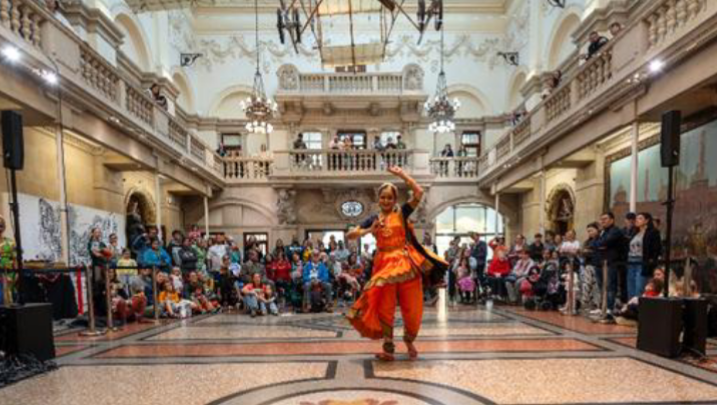
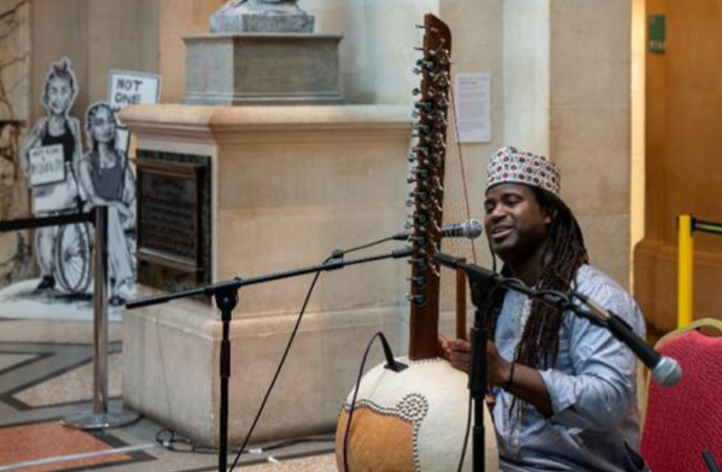
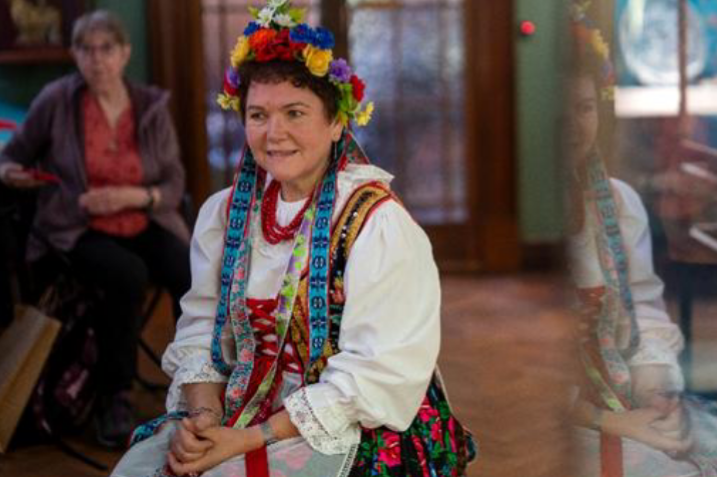
We’re so grateful to everyone who took part, and especially to Grazynka from the Anglo Polish Society,whose brilliant tales had people enthralled in four well attended sessions.
Sanjit Singh Chudha
Public Programmes Manager (Museums)
Bristol Culture & Creative Industries
Bristol City Council
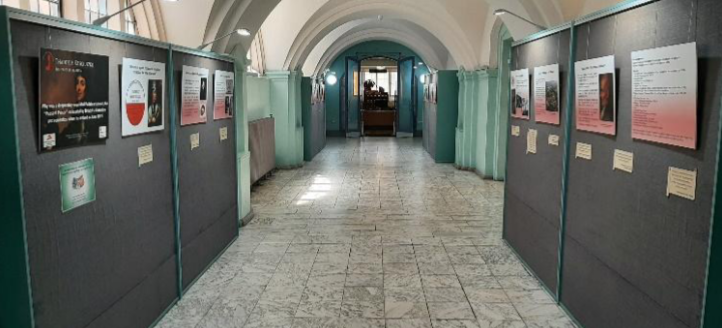
Prior to Covid-19 restrictions imposed in March 2020, the Anglo Polish Society, Bristol and the South West (APS) Committee started working on a project to commemorate Tadeusz Kościuszko’s visit toBristol in June 1797. After many years of research, developing and nurturing relationships with various organisations, and extensive content work; this tremendous project came to splendid fruition for all involved.The first element was the two-week exhibition at Bristol Central Library “Why was a desperately wounded Polish aristocrat, the “Peasant Prince” so lauded by Bristol’s dissenters and romantics when he arrived in June 1797?” Feedback from visitors and Library staff was very positive and a “great learning experience”.
11th June 2024 was an extraordinary day of joy and celebration, when the second and major element; the unveiling of the plaque commemorating Tadeusz Kościuszko’s stay at the White Lion Inn in Bristol in June 1797 was unveiled.
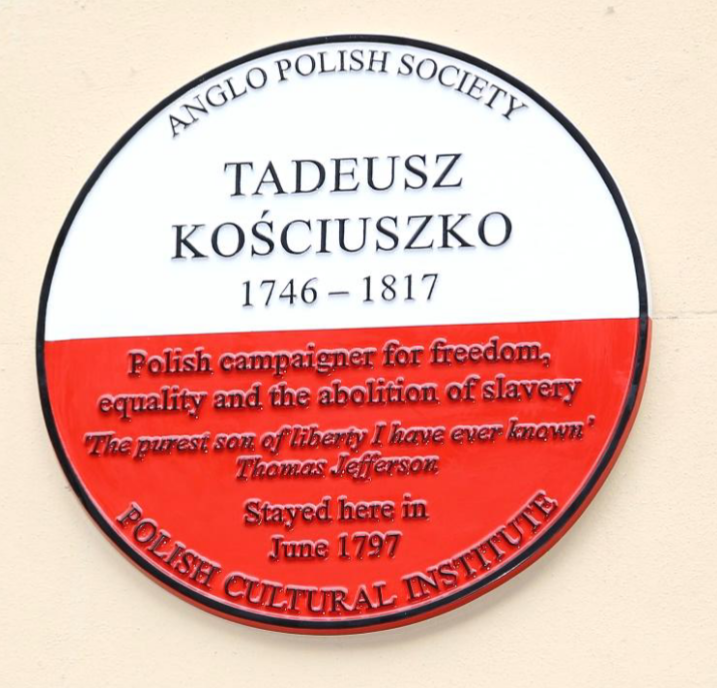
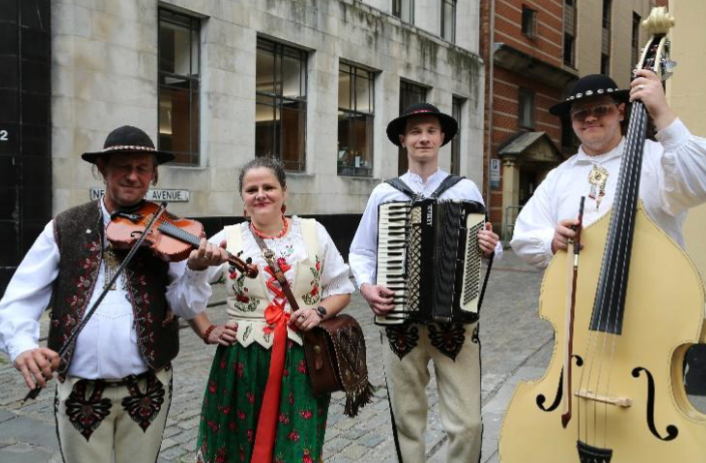
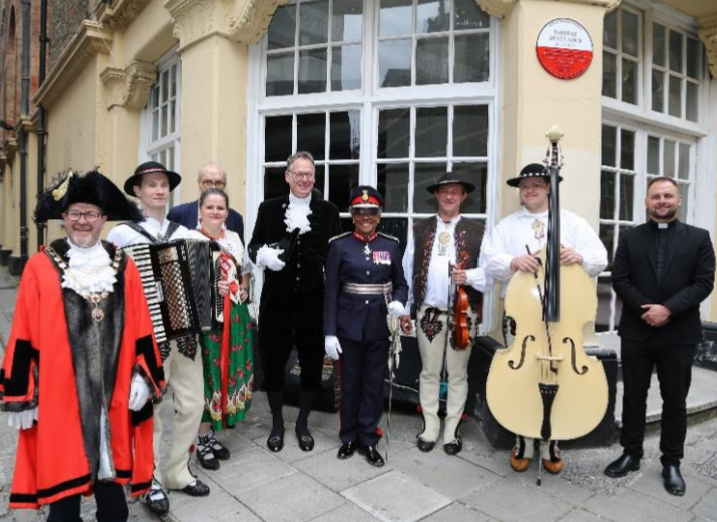
The White Lion Inn stood on the corner of Broad Street and New market Avenue in Bristol. During his stay in Bristol, Kościuszko also spent time in the American Consulate in Bristol, before sailing to America.Distinguished guests were joined by members of the APS and other guests, both Polish and British. The Emigranty Highlander Family Band created a lively atmosphere of highlander songs, including “Hej tamspod Tater”.
Dr Stefan Cembrowicz, acting Chairman of the APS, welcomed everyone and explained why the plaque was in this location and how Kościuszko was welcomed and feted in Bristol; celebrated by Dissenters, Quakers, Methodists, the Romantics and Radical Doctors; all who wanted an end to the slave trade and greater rights for ordinary people.
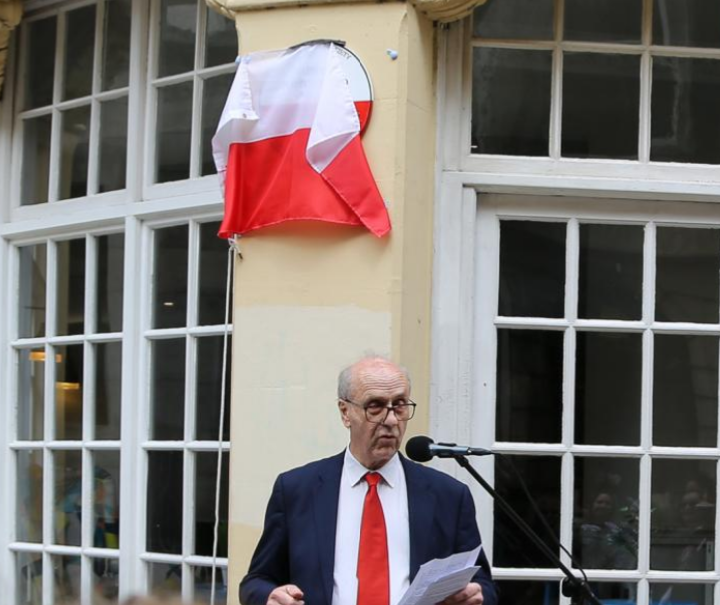
Dr. Simon Selby, President of the APS, and Honorary Consul of the Republic of Poland in Wiltshire, Somerset, Dorset, Bristol, represented the Embassy of the Republic of Poland and said what an honour it is to witness the recognition of the greatness of this patriotic hero and his commitment to his beliefs about human freedom against oppression.
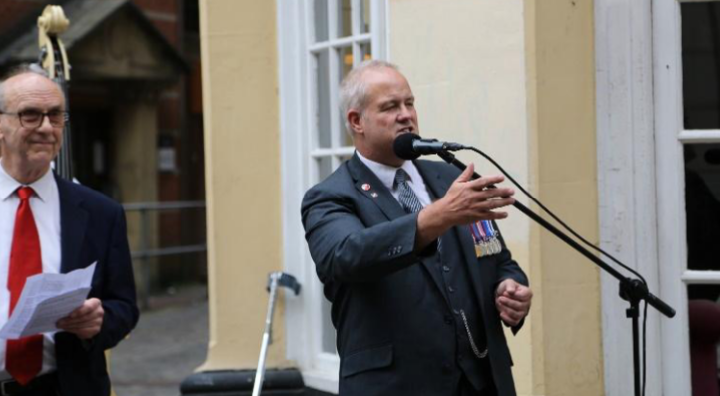
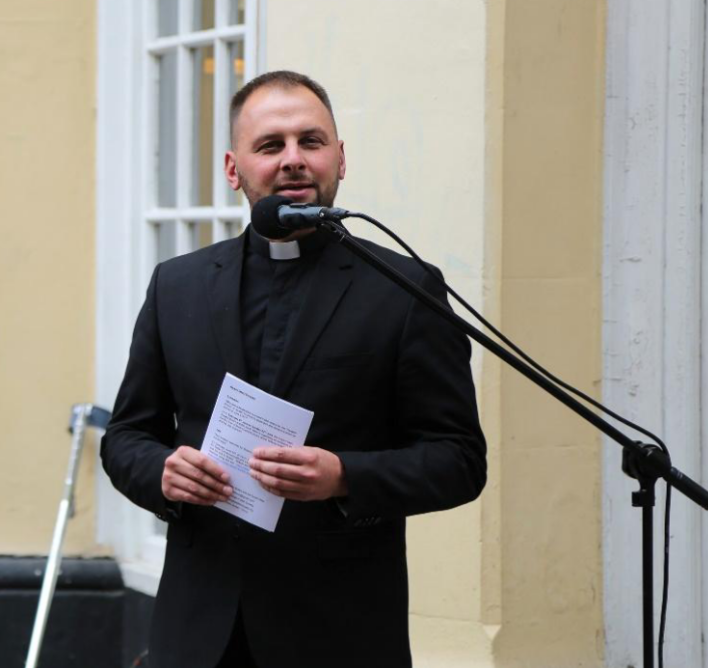
Father Jacek Michalski, Parish Priest of the Polish Church of Our Lady of Ostrobrama spoke in Polish about Kościuszko’s deeds and the fact that his beliefs were far ahead of his time. During Kościuszko’s visit, Bristol was still involved in the transatlantic slave trade. Father Jacek explained how Poles recognized and honoured Kościuszko’s deeds by building a mound in Kraków named after him.
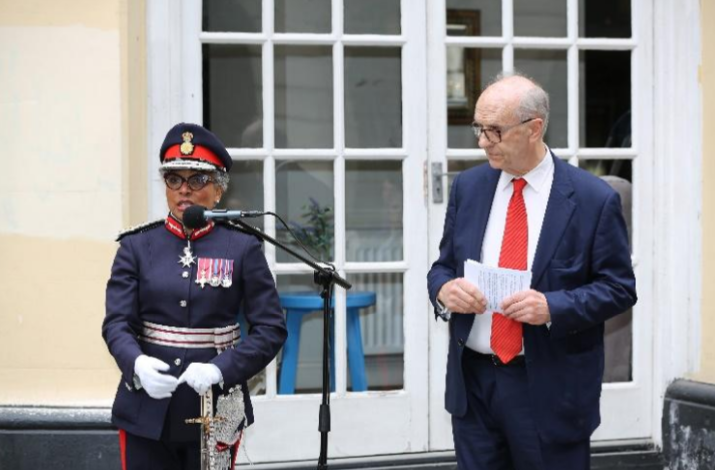
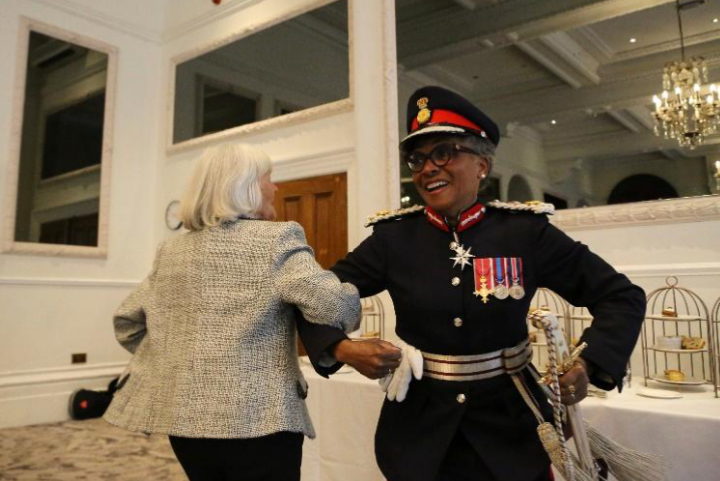
After a few congratulatory words on bringing this project to fruition, the Lord Lieutenant of Bristol Peaches Golding OBE conveyed the greetings of King Charles III; drew her sword and unveiled the plaque with her sword.
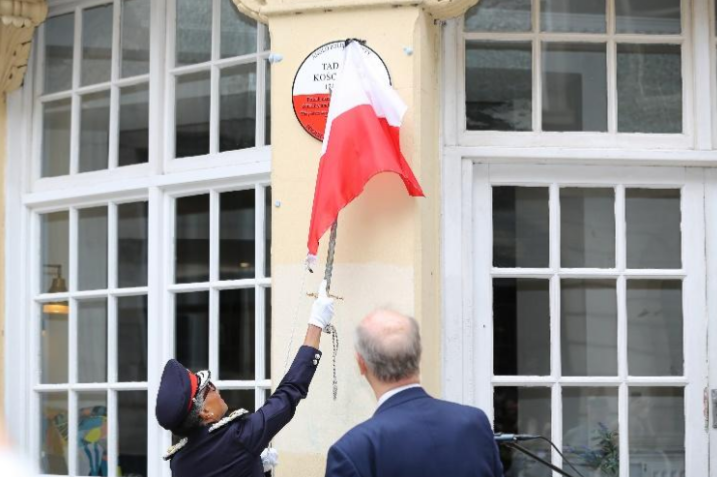
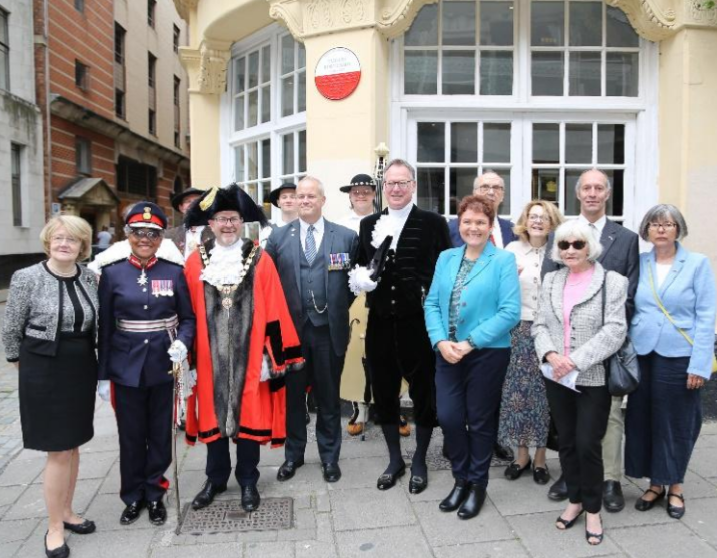
After singing the Polish and the United Kingdom anthems, everyone retired for light refreshments and Polish cakes!!
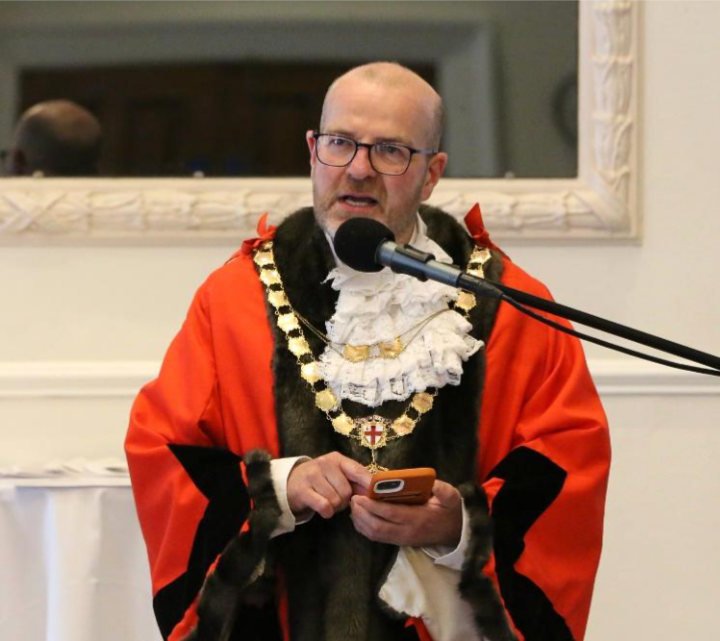
Here, The Lord Mayor of Bristol, Councillor Andrew Varney, as the first citizen of the city and county of Bristol, thanked the APS for the invitation to such an important event and praised the contribution of the Polish community to life in Bristol and its development.
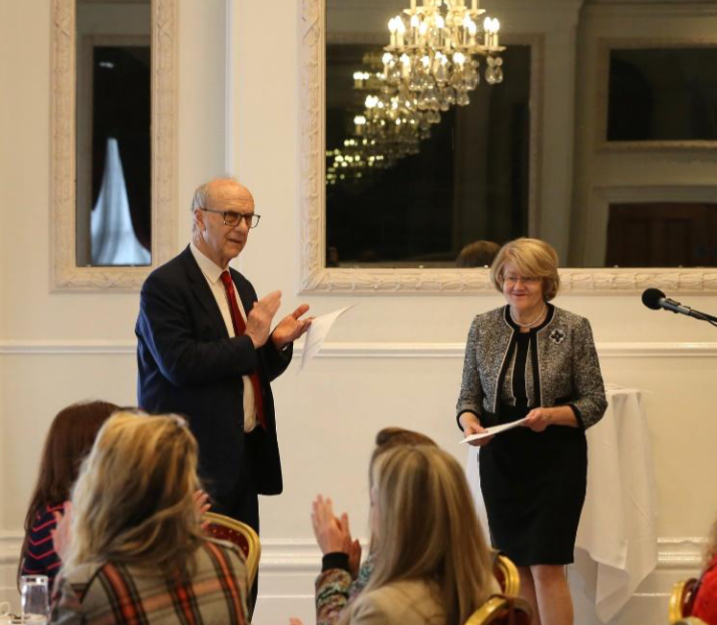
Halina Countess of Munster, Patron of the APS, explained the organisation’s rich history and heritage and thanked the Polish Cultural Institute for supporting and funding this project.
The Highlander Band ended a wonderful day with a joyful mood and excellent music that encouraged our guests to get up from their chairs and dance.
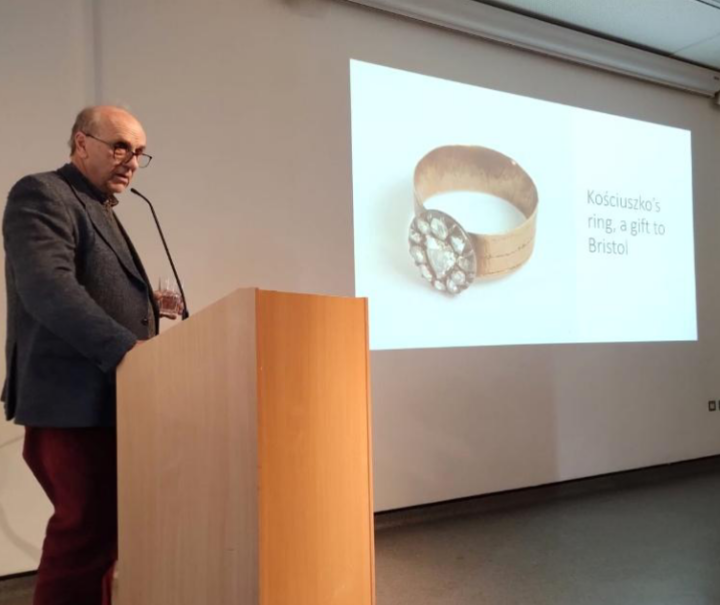
The third and final element of this project was a very well received and supported talk by Dr Stefan Cembrowicz at the Bristol M Shed Museum, about Tadeusz Kościuszko and his visit to Bristol.
Grażynka Kowalewska
Every Polish soldier who made it to the UK has a tale to tell. And Magda Czajkowska, mother of our member Dr Monika Blackwell who had already recounted her dad’s remarkable tale of survival as a teenage insurgent during Powstanie Warszawskie*, told us the celebrated tale of surely the most unusual, indeed unique, Polish soldier, Wojtek the Soldier Bear. This bear has passed into myth and legend as the orphaned bear cub who became a Regimental – and Polish Forces- mascot.In 1942 he was rescued by Polish Forces, part of Gen Anders army en route from their Siberian Gulags.They bought him in Iran somewhere between Pahlevi and Teheran. He then travelled with the 22ndArtillery Supply Company, an active front line artillery company and part of 2nd Polish Corps – by now100,000 strong.
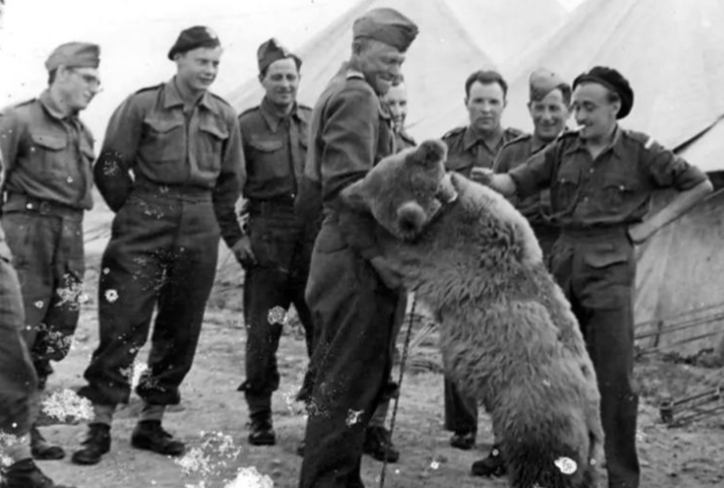
His regiment went from the Middle East to Italy. Baby bears do get bigger, and so did Wojtek. He was to reach 6 ft tall and weighed around 500lbs.To ensure rations reached him, he was enlisted as a private soldier with his own pay book. Promotion soon came his way, and he became a Corporal, though it is notre counted where, or by which brave colleague, his Service medals were pinned. He enjoyed a bottle of beer and a cigarette, which he would eat. (Please do not try this at home).
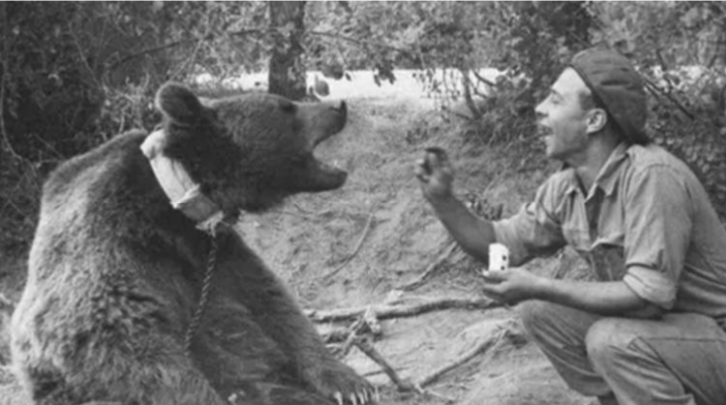
Being raised and cosseted by humans meant that he thought he, too, was a soldier.Observing the behaviour of his military companions, he was taught to lift heavy boxes of 25 pounder artillery shells (carefully) and now appears doing so, on the regimental badge.One eyewitness told me that they saw his unit driving their truck down to the beach in Italy for a swim.The soldiers stripped off and ran into the sea, followed by the huge, hairy figure of Wojtek, by now fully grown. This caused panic among the Italian bathers, who fled for safety out of the water and hid in the sand dunes.
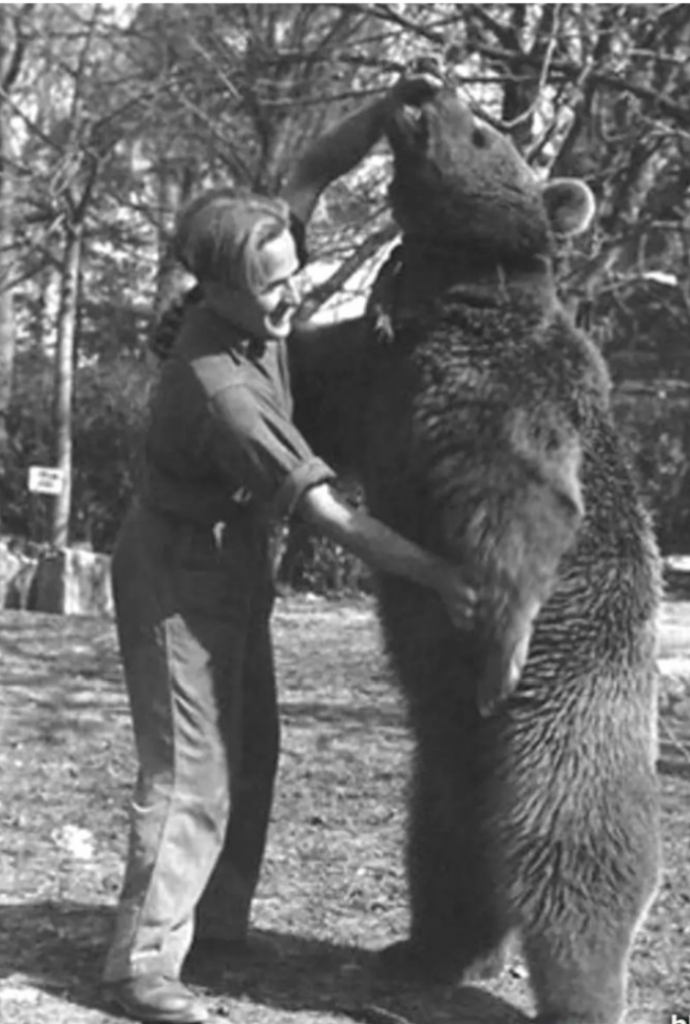
His front line unit was not a sinecure and was regularly exposed to gunfire. Wojtek survived Monte Cassino, where so many didn’t. When the war ended, his unit travelled to Scotland, and he was stationed in Berwickshire, until he was demobbed in 1947.At this stage, he was sent to Edinburgh Zoo, where he would recognise visiting comrades in arms, who would throw him cigarettes to eat. He appeared on the BBC’s Blue Peter programme several times and died in 1963.Why was Wojtek made so welcome? Keeping a full sized brown bear at the Front does raise certain,ahem, practical difficulties. But the young men who rescued him and clearly cherished him must’ve empathised with him as a displaced fellow being, a victim of war, who, like them, had lost his home and family.RIP Wojtek – the brave Soldier Bear.Stefan Cembrowicz Photos courtesy of Polish Institute and Sikorski Museum.* Warsaw 1944 – An Insurgent’s Journal of the Uprising; Zbigniew Czajkowski (Pen and Sword publishers)
Some serious questions: What does the human race learn from the terrible wartime inhumanity inflicted by one group upon another? From the continuation of warmongering around the world, it would seem as a species – if those in power can be said to represent the human species- nothing has been learnt as people continue to be tortured and killed, frequently in the name of group or national good. So how can something positive come out of ‘man’s inhumanity to man’? And, importantly, how can future generations learn to contribute to a better, kinder, more truly democratic world?
The dynamic and charismatic founder of the charity behind the exhibition descriptively called ‘Learning from the Righteous’, Anthony Lishak, gave a thought-provoking talk to APS and visitors through focusing on Irena Sendler, one humble woman whose extraordinary courage and defiance against such inhumanity helped save hundreds of Jewish Poles, particularly children, during WWII. Her bravery is an inspiration to everyone who feels they cannot stand by and do nothing against tyranny. And it was no small action: her help to endangered Jewish families led to her torture and near execution. Though her work was truly heroic, she never saw herself as that. She felt she was merely taking on the values instilled in her father, Dr Stanisław Krzyzanowski to help others in need, no matter who they were. To put Irena’s work into context, 6,706 Polish rescuers have been recognised by Yad Vashem as ‘Righteous Among the Nations’, the Jewish honour bestowed on non-Jews who helped them escape persecution, acts in which they risked death.
At the time of the stepping up of wartime Jewish persecution by the Nazis in Poland, Irena Sendler was a young social worker in Warsaw who spoke Yiddish, two facts which helped her take action to try and save as many Jewish people in the Warsaw Ghetto, and ultimately, being sent to their deaths, as she possibly could. Her organisational and networking skills were a great asset in her hidden work. The display boards in the exhibition and the accompanying informative booklet gave the fuller story of Irena and the other Polish Resistance workers.
The exhibition in Bristol at The Gallery Space, in Bridewell Street, was on from 9th to 15th July. As well as giving the APS talk, Anthony worked with groups of schoolchildren in the Bristol area. It is this aspect which is at the core of the ‘Learning from the Righteous’ charity. Anthony explained that it is through building empathy in young people that there is hope for a better world. The accompanying exhibition booklet clarifies this approach: “The work of ‘Learning from the Righteous’ is based on the belief that the quality of a child’s early encounters with the Holocaust will determine their relationship with the subject from then on. The charity works with children in the 10-14 age range from a variety of religious and cultural backgrounds and focuses on the acts of rescue and resistance by those recognised by Yad Vashem as ‘Righteous Among The Nations”.
In my school teaching days before I worked with adults, I saw how engaging children with literature which developed the reader’s imagination could have in building understanding and empathy towards other human beings. Many books dealing with various kinds of injustice are used by teachers for broadening pupils’ minds. It is not a matter of taking in facts alone, for empathy involves being able to put yourself in the shoes of another human being, precisely the quality which is missing in those with racist and psychopathic tendencies.
I remember particularly using ‘The Diary of Anne Frank’ with a difficult group of teenagers and seeing the humanising effect it had on them. They had never been exposed to the Holocaust story before and were clearly shocked to learn about it. Through identifying with Anne Frank, a girl their own age, the story of the persecution of the Jews was experienced not just as facts but emotionally, in real human terms. As a result of studying this book, I know the horizons of the girls I taught were broadened and I hope they individually reflected on the many issues it threw up later when they were adults. Talks such as the ones organised by this charity are obviously extremely important, for like reading, true listening opens hearts and minds. Having an engaging speaker- which Anthony most certainly was- helps the message touch the listeners in a profound way.
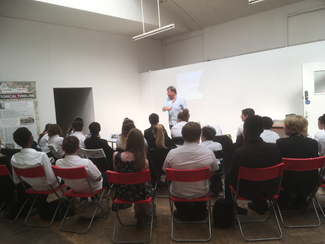
The charity sees the development of empathy and compassion as vital to combating intolerance and prejudice which, when stirred up by dictators, resulted in the genocide of WWII. I wish the ‘Learning from the Righteous’ charity the very best of luck in their important humanitarian work based on the Holocaust. Developing empathy and humanity in people towards others, no matter what their beliefs or nationality, is an ongoing challenge for every generation in every place in the world. May compassion for all fill every human heart.
By Alicja Christofides (nee̒ Świątek)

What a delightful jewel of a place this Botanic Garden is! And what a fascinating tour our group was taken on by our hugely informative guide, Charmaine Hawkins, who ignited our interest and imaginations as we walked around this amazing collection of plants and flowers from many of the world’s habitats. She added a fascinating depth of detail which enriched our visit on this dazzlingly sunny day and helped to make it an unforgettable experience.
Amongst the many groupings of plants from different areas and eras of plant evolution, – the Botanic Garden cultivates around 4,500 different plants from around the world- those we visited included the Western and also the Chinese Medicinal Herb Gardens.
The APS group photograph was taken by the stunning sculpture of a Kapok flower which was presented by the city of Guangzhou in southern China as an important symbol of the ‘sisterly relationship’ between Bristol and Guangzhou: it brings together governments, universities, industry, trade, research and education.

The medicinal herbs grown in the Chinese herb garden area were clearly labelled, as were the western medicinal herbs. In fact, labelling throughout the gardens was excellent.

Amongst the many fascinating areas in the Botanic Garden was the Evolutionary Dell where the plants of the Jurassic world are part of the experience!


As we walked around the various facets of the grounds, our tour guide Charmaine (pictured above) explained that the planting in the gardens represented the new system of plant classification which has resulted from a fresh understanding of plant relationships. This has had huge significance for the world of Botany. There were many other highlights on the tour, including a partly constructed African round house, still awaiting the thatched roof and the mud and straw walls to be added. The tour concluded with a visit to the large glass houses.
My Polish adventure started in the late 1950s when I moved with my family to Warsaw. I was very young and it was only in later years that I began to appreciate the richness of the experience and to come to understand that Poland is an exceptional and truly exemplary nation.
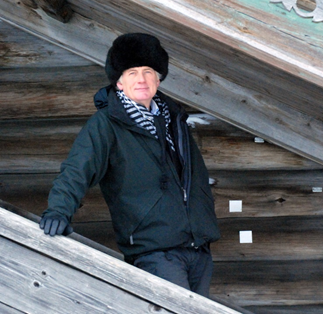
When I moved to Warsaw the city was still recovering from the trauma of the Second World War during which 90 per cent of the city had been destroyed or very seriously damaged, with around 200,000 Poles killed by the Nazis during the 64 days of the Uprising that started on the 1st August 1944. By the late 1950s most of the city had been rebuilt, including the famed Old Town. This had been a centre of resistance during the Uprising and had been largely obliterated, but by the time I arrived in Warsaw the Old Town had been recreated – in an almost miraculous manner – in all its medieval and Baroque wonder. This had happened despite the disinterest of the regime that in 1945 the Soviets had installed in Poland and which they controlled in very direct manner. Quite simply, the reconstruction was due to the will and passion of the Polish people. Warsaw represented, in many ways, the heart and soul of the nation; it was the repository of cultural pride and national identity and its loss was intolerable. After the failed Uprising the Nazi’s had undertaken the systematic destruction of the city for symbolic reasons – they sought to destroy Polish pride and identity. So, for symbolic reasons, the Old Town – the heart of Warsaw – had to be rebuilt in authentic manner to prevent evil from having the last word in the story of the historic city. For most Poles the destruction of the city was a great wrong that had, as far as was humanly possible, to be put right. So, as the result of a grass roots reaction, the 17 hectares of the Old City – complete with stretches of city wall, the barbican and large and grand market square – was rebuilt and rejuvenated, This is where I lived as a child – in an apartment in a newly reconstructed Baroque-style building looking into the market square – and it was, to put it mildly, a formative experience.
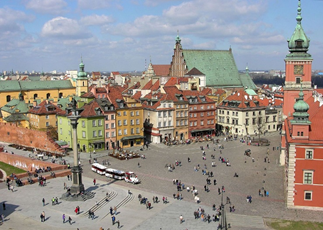
The Polish achievement of reclaiming the lost historic city centre of Warsaw – at the time against all the odds – was, and remains, an inspiration. The seemingly impossible is possible if you put your mind to it. And, in specific terms, it is a demonstration that lost or destroyed historic buildings can be successfully recreated – that the dead can live again – when the reconstruction is undertaken with love and commitment. This lesson is now particularly relevant at a time when we are confronted by the brutal and shocking destruction of history that has taken place during the last two years in Iraq and Syria. The rebirth of historic Warsaw shows what is possible.
The destruction and reconstruction of Warsaw in the late 1940s and 50s is the most recent and dramatic demonstration of the indomitable Polish spirit. From the late 18th century until the end of the First World War Poland was partitioned, occupied and subjugated by Russia, Prussia and Austria and yet the Polish nation survived. From 1918 until 1939 the nation regained independence and sovereignty as a republic and then – in the most violent manner – was once again invaded, divided and occupied. Yet, despite this cruel misfortune the Polish people were uncrushed and strove to retain their identity and to regain the independence of their country – at times a seemingly impossible dream – by the exercise of their skills and by the demonstration of their determination and courage. In the early nineteenth century Poles had fought against the occupiers of their country by fighting for their enemy’s prime enemy – Napoleonic France. Quite simply, their friend’s enemies became the enemies of Poland and some of the finest troops in Napoleon’s Imperial Guard were Polish lancers. A comparable situation arose after the fall of Poland in 1939 with Pole’s serving with great distinction in the RAF during the Battle of Britain, with the 8th Army in Italy and with the British army in northern Europe in 1944 and 1945. The major contribution Polish soldiers made to Britain’s ultimately successful battle for freedom must never be forgotten – nor sadly must their generally shabby treatment by the British authorities after 1945. But generosity of spirit is also among the cardinal virtues of Poles and, thankfully, this British lapse of resolve in the face of Stalin’s demand that Poles and Poland be surrendered to his dark domain has been forgiven.
In these increasing hostile times – with events in Britain, in mainland Europe, the United States and the Middle East promising a very uncertain future – the story of Poland is a beacon of hope. It shows that the very positive virtues of courage, understanding across cultural and national boundaries, determination and hard work can ultimately prevail over the forces of darkness. The enemies are – as ever – intolerance and greed, but now made dangerous in the extreme by fanaticism, territorial ambition, political amorality and bellicosity. Combined these make the world a very dangerous place indeed. It is essential that Poland – as a model and brave European nation with an exemplary heroic history – now remain strong and true to its best guiding principles and traditions. With a friend like Poland no enemy need be feared, and there is surely no better way to foster friendship between Britain and Poland than by encouraging cultural and economic connections between the two nations. For this reason I am delighted to serve as President of the Anglo Polish Society.
Dan Cruickshank – January 2017
In 1928 the Equal Franchise Act was passed and, for the first time, all women (and men) over the age of 21 were eligible to vote. One year later the Townswomen’s Guild was formed with the aim of educating women about good citizenship – and to have fun! Last year Knowle Guild celebrated its 80th birthday and we are still being educated and informed – and still having fun! When planning our monthly meetings we look for speakers who will help us to fulfil these objectives.
The Polish population in Knowle has increased significantly in recent years. Some of our members have Polish neighbours, we hear the language spoken at the bus stop and in the park and there are two Polish shops in the area. It seemed appropriate that we should get to know more about the people living amongst us. Having no connection with the Polish community I found a website for the Anglo-Polish Society and their first objective, “to promote good relations between local communities and Poles living in the area” was just what we wanted!

There followed a flurry of emails between myself, Chris and Grażynka as to what would be the most appropriate things to include in a 45 minute presentation. When Grażynka and Bożena arrived at our Guild meeting we knew we were in for a treat! From the interior of their car came an enormous array of national costumes, amber jewellery, leather goods, painted wooden eggs, wooden sculptures and pictures, guide books and cakes – lots of cakes!
Before the presentation Chris gave a brief outline of the origins of the Anglo-Polish Society and gave details of a book published by the Society entitled “In War and Peace – Poles who came to the West Country”. It was lovely to see a photo of Grażynka’s parents on their wedding day and another one of Grażynka as a child included in the book.
Grażynka introduced herself as “Polish on the inside and Bristolian on the outside” as she was born in Bristol to Polish parents. She had prepared a series of slides to illustrate her talk and they were very informative. Having given a brief history of Poland by Grażynka It became increasingly obvious why the Polish language and culture is so precious to her.
For much of its history Poland has been fighting off invaders, and we were shocked to hear that in the late 18th century Poland was wiped off the face of the map and the land divided between Austria Prussia and Russia. The Anglo-Polish Society was formed in 1832 in support of a Polish uprising which was brutally put down by the Russians. The suffering of the Polish people during World War 2 was starkly illustrated using statistics and photographs. Whereas 0.7% of the UK population was killed, in Poland it was 20%. We saw a distressing photograph of a Polish civilian starving to death. The whole room gasped in horror. Having fought with the Allied troops many Polish personnel remained in Britain rather than return to a Communist regime.
Grażynka explained that, throughout Polish history, the battle for freedom included the determination to keep the Polish customs and language alive and to excel in literature, art and science. We were reminded of the contribution of Copernicus and Marie Curie amongst others.

We were taken on an illustrated tour of Poland and saw interesting photos including that of the Wieliczka salt mine, an iconic brown bear and Warsaw before and after its reconstruction. Three of our members have visited Poland and many more would now like to go!
Grażynka finished her presentation by talking about the national costumes, typical crafts and the types of food to be found in Poland – and in our local Polish shops. After the talk we were able to have a closer look at the many items on display and Grażynka and Chris were on hand to answer any questions.
The afternoon finished with a feast of Polish cakes for us to enjoy!
Thank you all for the obvious effort you had put in to making this a memorable afternoon for us.
Stella Tratt

Helen Reid
The Performing Arts Centre at Redmaids’ School, the oldest continuously operating all-girls’ school in the country (from 1634), was the venue for our concert on a lovely autumn day. We settled down for an afternoon of light classical and popular operatic music performed by some of the most talented young musicians in the area. They had been brought together by Angela Hickey, a leading local voice teacher who had a long and distinguished international singing career, appearing in many opera houses and concert halls all over the world including Poland (Warsaw and Łódz).
Pianist Helen Reid played throughout, mostly as an accompanist but also performed some lovely solos, introducing many of us to Szymanowski’s preludes and giving us a magnificent bravura rendering of Chopin’s stirring first Ballade. Violinist Anneka Sutcliffe performed some of the loveliest violin solos in the repertoire, including Massenet’s ever-popular Meditation from Thais, the Tango in D by Albeniz and those Elgar ‘plums’, Chanson duMatin and Salut d’Amour in which she produced some ethereal sustained high notes.
The two sopranos, Hayley Guest and Laura Curry, both studying with Angela, presented a wide range of arias and songs. Hayley began with two Handel arias, her high soprano effortlessly negotiating the technical demands of these challenging pieces. Later she sang one of Despina’s arias from Mozart’s CosiFan Tutte and a group of English songs by Parry, Head and Vaughan Williams. Laura, a radiantly-voiced lower soprano, gave us a mixture of arias and songs, including a wonderfully poised rendering of that Dvorak gem, O Silver Moon. She combined with Hayley for duets from operas by Mozart, Delibes and Offenbach, including those Classic FM favourites, the Flower Duet from Lakme and the Barcarolle from The Tales of Hoffman. Laura also sang the heart-stopping Morgen by Richard Strauss, with its most moving words, accompanied by Anneka, as well as by Helen.

The Lord Mayor of Bristol, Councillor Faruk Choudhury accepts the first copy of our book from Chris Ottewell officially launching our book.
Our book launch started when Co-Chairman, Chris Ottewell welcomed our guest of honour, The Lord Mayor of Bristol, Councillor Faruk Choudhury.
We were also delighted that Mary Prior, HM Lord Lieutenant of Bristol, and her husband were also able to attend along with Councillor Ian Boulton the Chairman of South Gloucestershire Council and Fr.Stefan Wylężek, Rector of the Polish Catholic Mission of England and Wales.
Most importantly a large number of contributors, members and guests were able to participate.
Chris introduced the guests and said a few words about the origins of the APS and the very long links between Poland and Bristol including the plaque in Queens Square which proudly proclaims: The Polish patriot Tadeusz Kościuszko stayed here June 1797.
Sadly our President Jan Mokrzycki was unable to attend but sent a message which Marek Kowalewski read on his behalf.
Similarly the Polish Co-Chair Zyta Szulejewska, a Lady who has done more for Poles in Bristol and the West Country than possibly anyone else was also unable to come. Past Chairman Anne Foot delivered her message.
Much of the funding for our book was provided by The Heritage Lottery Fund. Cherry Ann Knott spoke very generously on their behalf saying that she was genuinely astounded by the enormous value for money that The Heritage Lottery had received as a return for their assistance with funding our book.
To give everyone a flavour of the book, eight members took to the stage to read a series of representative extracts – the power of the book revealed itself as more than one could be seen to be working hard to repress emotions as they read.
Chris officially launched our book by presenting a copy to the Lord Mayor of Bristol, Councillor Faruk Choudhury, asking him to say a few words.
The Lord Mayor spoke very eloquently of his experiences and illustrated how he had also arrived in Bristol as a youngster from a war zone, Bangladesh in his case, and drew interesting parallels between his experience and those of the Polish community nearly half a century earlier.
He was followed by the Polish Rector Fr.Stefan Wylężek who expressed gratitude in the welcome received by Poles in the UK which enabled such positive integration; after which Lady Danusia Trotman-Dickenson made a short speech.
Following the official section of the evening, we were all thrilled when Katy Carr stepped on stage to say a few words and entertain us with a couple of her songs. Just like his predecessor, the Lord Mayor was delighted to belt out a couple of choruses of “Wojtek” along with Katy, Councillor Ian Boulton, the Polish Rector and the rest of the audience.
A fantastic evening was completed with Polish cakes and excited conversations as we distributed books to contributors who excitedly found and read their accounts in print for the first time and the sale of the book to others.
We know everyone will treasure this book for years to come and must conclude with yet another “thank you” to all our contributors without whom there would have been no book.


-

- Sheila shows off the book

 “It was very enjoyable afternoon with good music, I particularly enjoyed zuchy, (it’s always nice to see children sing and dance) Katy, and Górale with Ania were very good, and it was good to meet with friends.”
“The best value annual cultural event in the West of England.”
“Great to see the 8 to 80+ age groups all having fun together!”
“With the addition of Polish drinks and food it’s turning into an annual Polish Festival – Fantastic!”
“Katy Carr was the highlight of the evening captivating the audience with her songs and stories.”
“A thoroughly enjoyable event with something to see and hear for everyone.”
“Some of the artwork upstairs was fabulous”
 “I went to the Poles Aloud event just in time to see Katy Carr singing and it was very impressive with her songs taken from traditional Polish tunes as well as her own songs which include so much of Polish History, such as the story of Wojtek the bear , who was adopted by Polish troops and made a corporal in the Polish Army, seeing service in the battle of Monte Cassino. This was a song that could be enjoyed by all generations and it was lovely to see a crowded mixed age group, varying from babies to pensioners there. Next there were more modern groups, followed by a folk group playing traditional mountain folk songs on violins , so something for everyone! Many thanks to all who organised it.”
“Loved the photographs”
“After Katy finished, the Lord Mayor of Bristol left with a red and white garland on his head and a wide smile across his face!”

“Great to see Poles of all ages and backgrounds joining together to celebrate their culture and showcasing it to the public of Bristol.”
Photographs with thanks to Krzysztof Rzeszut

Stanislav with Halina, Countess of Munster
“Better than Nigel Kennedy”; “I wouldn’t have missed it for the world”; “Brilliant”; these were just three of the things members of the select audience at Siston Court said to me after Stanislav finished his recital on Sunday evening. Given that our members know a thing or two about music I need say no more about the quality of playing.
The program was perfectly selected to match the audience as well, with a mixture of classical and jazz works to suit all tastes. All too soon it was over. However, a rousing ovation persuaded Stanislav to return and play a very special encore. This was the piece written for him and dedicated to him by Bartosz Jazdzewski which had been premiered only the night before at POSK. I was lucky enough to attend that concert and like the rest of the audience was delighted at his choice of encore.
Stanislav was also impressed by his audience and remarked to me that “audiences in the USA don’t give any performer the respect I got tonight with everyone silent and listening to me play – I really appreciated that and enjoyed it too.”
We were especially delighted that our President, Halina, Countess of Munster, was able to travel down from London to enjoy the evening with us. At the end of the recital she said a few appreciative words and presented Stanislav with a Bristol Blue Glass Diamond Jubilee commemorative paperweight and a copy of Adam Zamoyski’s “Poland A History” suitably inscribed to mark the occasion.
Chris Ottewell
Czuwaj!
I was pleased to attend the recent concert by Katy Carr and the Aviators, and the short film “Kazik and the Kommander’s Car” held at the Polish Ex-Combatants Association Club, on behalf of the County Commissioner for Avon Scouts, Mr. Dan Wood.

Katy Carr
Although prior to the event I had taken the opportunity to watch some of the documentary, I was still unprepared for the raft of emotions during the evening. As Katy
interviewed Kazik, he took us all on a journey – from happier times as a young man, through to the invasion of Poland by the Germans until his terrible incarceration at Auschwitz. After two years at the camp, a friend suggested to Kazik that they could escape using the Kommander’s car. This was a defining moment particularly when Kazik stated in his interview “…that was the spark…” – “…I knew then that it would work if I brought it all together…” [sic].
Watching the animated film on a large screen actually made you feel part of the desperate but ambitious task that the escapees had decided upon. Dressing in the uniforms of the SS (so despised but the only option), emptying the weapons except one that was kept loaded “…in case we fail…we can’t let our friends suffer because of us..”, and then the drive to the checkpoint. Katy’s musical tempo of the tense moments as 80 metres passed, 50 metres passed, until at 15 metres the checkpoint was still not open, and it fell to Kazik to do something – anything. Whatever power helped him at that moment proved that a true belief can enable you to do anything that you have set your heart upon, and in this particular case it was a belief that Kazik and his fellow escapees would succeed…
All around the room, the emotions that evening were not just seen, but felt – by grown men and women, not necessarily Polish, who like me underwent a journey of sadness, horror, despair, hope, and finally thankfulness that Kazik and his friends escaped.
For those of you who weren’t there that night, I am pleased to report that Kazik is alive and well today to pass on a fundamental statement in Scouting, by visiting as many countries as possible to share in his mantra – Do Your Best! It was quite apparent that Kazik’s resourcefulness is down to his early years spent as a Scout, the years following his escape as a member of the Polish Partisans fighting for liberation, and furthermore that resourcefulness, so that even when he was monitored by the Communist regime, Kazik’s beliefs kept him in good spirits.

Polish Scouts, Guides and Brownies join Katy Carr in a couple of songs
UK Scouting is slightly difference from Polish Scouting – there is the Beaver Section for 6 – 8 years, Cub Section for 8 – 11 years, Scouts for 10½ to 14 years and Explorer Scouts for ages 14 to 18 years. During the last 12 months Cabot has also launched a Network Section for adults aged 18 – 25 years of age. All our sections are open to both girls and boys.
As District Commissioner for Cabot District within Avon County, my role is to lead and develop 18 Scout Groups including a Group based at the Bristol Children’s Hospital, seven Explorer Units, a Duke of Edinburgh Award Unit and the Ten Tors Hiking Unit.
Since my appointment as District Commissioner, I became aware of a Polish Scout Group meeting regularly at the Church, and it was wonderful to actually meet the leaders and young people that evening. Together I hope that Cabot District and the Polish Group can “go on a journey” to develop the relationship between the Polish Scouting Community and UK Scouting, to enable more young people to experience fun and adventure wherever they may be. I look forward to the day when both UK Scouts and Polish Scouts shout out together at a District or County event – “Be Prepared!”
Isabelle Mills, District Commissioner
Cabot District, Avon County
You can learn more about Katy Carr and her music by visiting her web-site KatyCarr.com
Her outstanding song “Kommander’s Car” with the official music video can be viewed on You Tube.
A promotional video for the film about Kazik and his famous escape.

Davey String Quartet and Jane Plessner
In June 2011, Penelope and Anthony Warne welcomed us to their converted medieval barn and extensive gardens at Sutton Courtenay for a picnic, and a musical recital performed by the Davey String Quartet and Jane Plessner on clarinet. The Quartet started with Mozart’s String Quartet op 465 (dissonance), capturing beautifully the nuances of Mozart’s composition and filling the barn with heavenly music.
Jane Plessner then joined the Quartet for Brahms’ Clarinet Quintet op 115; the clarinet blended brilliantly with the strings, evoking a warm serenity of musical elegance, complex, rich and brooding, a supreme achievement in chamber music.

Anne Foot thanks the performers for a very enjoyable concert
The recital ended with rapturous applause from a delighted audience as APS Chairman Anne Foot thanked the musicians, members and their guests for attending; and asked APS President, Halina Countess of Munster, to present the musicians and our hosts with roses and our sincere thanks. We then had an opportunity to stroll around the wonderful gardens, taking in riverside walks along the Thames.
In 1944, a plane from the Polish Air force was returning from a mission and developed engine problems. Instead of bailing out of the plane, the airmen flew on to avoid the populated area of South Bristol and crashed in a field next to Long Ashton Church. These brave men sacrificed their lives to save others and this is commemorated every 5 years when the date falls on a Sunday.
The Aircrew Remembrance Society
Long Ashton Parish Council
-

- Memorial to the Polish Airmen

-

- Long Ashton

-

- Chairman of the Anglo Polish Society Anne Foot with Stanlislaw

-

- After the laying of the wreaths

-

- Standard bearers in Long Ashton Church yard


Andrzej Bauer, Jan Krzysztof Broja and Kuba Jakowicz
Let me start by thanking Anne Foot and the Bristol and the South West Anglo Polish Society for their invitation to the concert and for their warm hospitality. Since attending it involves a round trip of some 240 miles I must admit that I had some doubts about coming, however, a sense of duty prevailed. Rarely has duty been so richly repaid.
I am no cognoscenti of classical music, but I have always believed that our great Polish composer wrote almost exclusively for the piano. I was therefore intrigued to see a duet and a trio included in the rich programme. The three musicians involved in the concert, Jan Krzysztof Broja (pianist), Andrzej Bauer (cellist) and Kuba Jakowicz (violinist) are all well known and hugely talented. They exhibited an almost symbiotic relationship, feeding of one another’s talents, the whole becoming even greater than the sum of the parts.
When I first saw the venue for the concert, Clifton College Preparatory School Hall, I imagined a severe, modern construction. What a pleasant surprise it was to be met with a historical building and a hall with excellent acoustic properties, a hall holding, I imagine, some 250 people, an audience who were both knowledgeable and appreciative.
In the first part of the concert we started with the extravagant Introduction e Polonaise Brillante in C major op.3 performed by the piano and cello duet. Thanked by enormous applause the same two musicians continued with the Sonata in G minor op.65. How nice it was to hear in this the undertones of some of the Polish folk tunes.
A 20 minute interval allowed a brief respite to digest and absorb what we have just experienced. Even more followed with the Etude in C sharp minor op. 25 nr 7 as arranged by A. Glasnove, followed by the piano and cello being joined by the baby of the family, the violin of Kuba Jakowicz. The magnificent Trio in G minor op.8 again held the auditorium entranced, the brief breaks between the four parts allowing the occasional cough to be indulged in. At the conclusion the huge applause called the musicians back to take their bows again and nearly brought the roof down. I think an enormous thank you is due to the Polish Cultural Institute who cooperated with The Anglo Polish Society in bringing over the musicians and agreeing the content of the concert. What a start to the Chopin Bicentenary Year 2010.
Our long way back was enlivened by the memories of a concert which will stay with us for a long time to come.
Jan Mokrzycki
Anglo Polish Society Patron

Joseph Conrad
When I learnt that the Anglo Polish Society in conjunction with the Bristol Central Library was holding a lecture on Joseph Conrad, delivered by Professor Tim Middleton of Bath Spa University, I knew this was an opportunity not to be missed. I teach English at Weston Sixth Form Academy and have been introducing my current AS Literature students to Conrad and two of his works: Heart of Darkness and The Secret Agent. We have been exploring his life, ideas about colonialism and terrorism, his astounding use of English (more so as it was his third language) and of course, mankind’s endless ‘fascination of the abomination’.
Offering my students a taster of university was fantastic and certainly has enriched their whole experience of learning about Conrad. We were offered a warm welcome by the Anglo-Polish Society and a rare opportunity to see the usually hidden library stacks as we descended to the lecture room.
Professor Middleton’s research interests lie in Conrad, his life and works, and also ideas about identity, nationhood, place and nationality. He shared some of his thoughts with us in a lecture entitled ‘Conrad and England’. We gained a clear insight into Conrad as a divided man; of Polish nationality yet living in England, a decision originally taken to avoid army conscription. Conrad’s sense of being an outsider was something that remained with him throughout his life, and as Professor Middleton argued, created an uneasy sense of identity for the author, as he was able to look upon the world with a double vision, a duality which resurfaced in his writings. Conrad was truly brought to life by the photos of the various houses and locations in England which helped shape his identity.
Professor Middleton also had time to answer individual questions and he gave us some excellent thoughts on Heart of Darkness. We left with pages of notes and a greater understanding of the writer and the influences working upon him. Thank you for this wonderful opportunity.
Claire Huxham
A delegation from the Polish city of Lublin has recently visited Bristol – part of the European Union’s “Intercultural Cities Initiative” The aim is to develop a project called Living Together in Europe Tour, with the objective of exchanging experiences and practical visits. At present there are 23 participating cities. Lublin chose to come to Bristol.
The Vice President of Lublin, Włodzimierz Wysocki, who is responsible for culture, sport and education, led the party in Early August. He was accompanied by Mariusz Banach, Michał Karapuda and Rafal Sadownik,all linked to the city’s cultural department.

Delegation from Lublin, with Anglo Polish Society members and guests including Marie Hackett (Legacy Commission) and Rosie Gilmour (UWE)
Asif Khan, the Community Engagement Manager at Bristol Libraries, assisted by Tammi Redman, made the arrangements for the visit. On the first day, there was a meeting at the Council House with Councillor Peter Hammond, deputy leader of Bristol City Council, Dr.Madge Dresser, Rosie Gilmour (University of the West of England), Anne Foot, Danuta Trotman-Dickenson, Anna Jozwiak (Anglo Polish Society), as well as representatives dealing with European affairs,Watershed and radio.
There followed an informative presentation on Lublin, and others on the Bristol Harbour Festival, Creative Learning Partnerships with Warsaw and Ruda Śląska, and Bristol community radio. It was a perfect opportunity for ideas to be exchanged on the development of policies in Lublin and Bristol – on multiculturalism working with non-governmental organisations and universities.
During their visit the delegation had the chance to learn how Bristol ran some of its cultural schemes, as well as the Harbour Festival. It was also an ideal occasion to discuss Bristol’s attempt to become European City of Culture, as Lublin will be a candidate for this title in 2116. There were many chances to meet representatives of the various groups based here – ranging from the Legacy Commission to those having links with other European cities and beyond.
The explorative approach of both Lublin and Bristol was typified by the trip around the harbour on the “Matthew”, the replica of the wooden ship which sailed from this dock to discover Newfoundland.
On the Saturday evening, the visitors joined the Anglo Polish committee for supper at the home of Sir Aubrey and Lady Trortman-Dickenson. Everyone present was delighted to be welcomed to such an historic house. Conversation flowed on wide-ranging topics in English and Polish. It was opportune that nine of the committee, or their spouses, were Polish-speaking. By a happy coincidence, Irena Warne, a committee member, originally came from Lublin! Our guests were most appreciative of the hospitality and we enjoyed their company. We shall look forward to building on this association.
 It was a great privilege to welcome Her Excellency Barbara Tuge-Erecińska, Ambassador Extraordinary and Plenipotentiary of the Republic of Poland, to Bristol.
You will have seen from her programme that many people had the opportunity to meet and talk to her. She arrived at Clifton Cathedral with a police escort and was met by Monsignor Canon Robert Corrigan, the Dean of the Cathedral. Father Frączek led the prayers and singing, and H.E. laid a wreath at the Katyń Memorial.
Members of the Veterans’ Association made a special effort to attend, as well as those of the Anglo-Polish Society and members of the community, some of whom had lost relatives at Katyń.
After interviews for TV, radio and the local newspapers, it was “open house” at 50 St Paul’s Road for coffee and delicious cakes. In fact, the Ambassador stayed later than planned to welcome some people who arrived after work.
Before the dinner, organised by the APS in her honour – and with the Lord Mayor of Bristol present, H.E. had a meeting with the Chief Constable of Avon and Somerset. This was followed by the Reception and an excellent meal. You will notice from the photographs that it was in every sense a relaxed and happy evening.
However, the schedule did not end there for our special guest. The next morning H.E. visited the Polish Church of Our Lady of Ostrobrama, before meeting Helen Holland, the leader of Bristol City Council to discuss matters of official mutual interest.
After this came a tour of the Lord Mayor’s Chapel, conducted by Harold Clark, Chaplain to the Lord Mayor, a ferry-boat trip to see Bristol from the water, and a walk across Queen’s Square to view a plaque commemorating on 10th June 1997, the 200th anniversary of a visit to Bristol by Tadeusz Kościuszko; Polish patriot, soldier, national hero and statesman who was on his way to America, where he offered his services to the American colonies in their struggle for independence.
We much appreciated the time and effort given to us all on what we understand was the first visit of a Polish Ambassador to the City.
Extract from H.E. The Polish Ambassador’s letter following her visit to Bristol
“Please accept my warm thanks for the Anglo Polish Society’s invitation for me to pay a visit to Bristol and for arranging my programme.
I greatly enjoyed my stay in the beautiful city of Bristol and was very pleased to meet members and friends of the Anglo Polish Society and the representatives of the city authorities and the Polish community. The meetings were not only very interesting, but also beneficial to my work and gave me a good insight into the local politics and issues facing the Polish community in the Bristol area.
I hope we will have further opportunities to meet and discuss issues of mutual interest in the future.”